Thursday, November 7, 2013

Transmedia vs Multimedia: The Blair Witch Project


Transmedia and multimedia are very similar but have its differences. Transmedia storytelling is the technique of telling a story or stories across multiple platforms and formats using current digital technologies. Multimedia refers to content that uses a combination of different content forms. Examples of multimedia are text, animation, still images, video footage, interactivity, and audio. It is normally accessed by electronic devices. An example of transmedia storytelling is the Blair Witch Project franchise.

The Blair Witch Project was a documentary horror film directed by Eduardu Sanchez and Daniel Myrick released in 1999. The film centered on three teenagers filmmakers, Heather Donahue, Joshua Leonard, and Michael Williams, who journeyed into Burkittsville, Maryland in October 1994 in search of a witch. The students disappeared and their footage was found a year later. The film received was a critical and commercial success received positive review from critics as well as grossing $248 million worldwide.  It is one of the most successful independent movies of all time.

The success and popularity of the film led to its large franchise. In addition to a sequel to the film, many books were also written about it. In 1999, the book The Blair Witch Project: A Dossier was released followed by Blair Witch: The Secret Confessions of Rustin Parr in 2000 and Blair Witch: Graveyard Shift in 2004. A series of eight young adult books called The Blair Witch Files were released a year after the film.  Independent comic book publisher Oni Press released a comic book titled The Blair Witch Project in 1999. Texas-based PC and video games publishing company Gathering of Developers released a trilogy of computer games based on the film in 2000. Each game centered on different aspects the Blair Witch mythology.  

The benefit of transmedia is the fact that it covers all bases so to speak. Those who do not watch movies as much as they read book can simply read can the film. Those who do not read as much as they play video games can indulge a heart-racing, action-packed game. Either way, the consumers are educated on the topic. Engaging in transmedia is the smartest decision any film or music corporation The Blair Witch Files can make becasue they will be expanding their audience, therefore generating more profit. 

Transmedia Avengers

Henry Jenkins has his own viewpoint when quoting Transmedia Entertainment: "We now live in a moment where every story, image, brand, and relationship plays itself out across the maximum number of media platforms, shaped top down by decisions made in corporate boardrooms and bottom up by decisions made in teenagers' bedrooms." According to Jenkins, A transmedia story represents the integration of entertainment experiences across a range of media platforms. The definition Jenkins gives in his book, Converging Culture, of transmedia storytelling is: stories that unfold across multiple platforms, with each medium making distinctive contributions to our understanding of the world, a more integrated approach to franchise development than models bases on urtexts and ancillary profits.

On the other hand multimedia as defined in Converging Media,by John V. Pavlik and Shawn McIntosh, is a combination of different types of media in one package, thus, film or video with sound is a type of multimedia, because it combines visual and audio elements web pages that combine text, animation, audio, or graphics are another type of multimedia.

The film, and concept of The Avengers is an example of multimedia and transmedia, just the fact that it was a movie made it a multimedia project, combining graphics with sound, and animation. It is also a form of Transmedia. The production is ambitious and full of challenges, maintaining parallels of the individual characters and bringing them together to work for a bigger picture and a larger audience. The franchise is innovate, DC comics (Batman Series) is also planning on coming out with their own collaboration, which will include a combination of their own superheros, not just Batman and Robin, Justice League.

The Avengers

The Avengers is a concept that takes Marvel's own creations and transforms them into something bigger. Larger audience, there's more essence of each character, the setting, the personalities. Jenkins has much to say about this, "Marvel can be seen as, “a story might be introduced in a film, expanded through television, novels, and comics, and its world might be explored and experienced through game play."

The Avengers was originally a comic series by Marvel, which was born in 1963. The characters of the Avengers orginally included Ant-Man (II), Beast, Black Knight (III), Black Panther, Black Widow (I), Captain Britain (Kelsey Leigh), Crystal, Darkhawk (Chris Powell), Demolition Man, Doctor Druid, Falcon (Sam Wilson), Firebird, Firestar, Gilgamesh (a.k.a. Forgotten One), Hawkeye, Hellcat, Hercules, Hulk, Human Torch (I), Invisible Woman, Jack of Hearts, Justice, Living Lightning (Miguel Santos), Machine Man, Mantis, Mister Fantastic, Mockingbird (Bobbi Batton), Moon Knight (Marc Spector), Moondragon (Heather Douglas), Photon (Morica Rambeau), Quasar (Wendell Vaughn), Quicksilver, Rage (Elvin Haliday), Sandman (William Baker), Scarlet Witch, Sersi, She-Hulk, Silverclaw (Lupe Santiago), Spider-Woman (Julia Carpenter), Starfox (Eros of Titan), Stingray (Walt Newell), Sub-Mariner, Swordsman, Thing, Thor, Thunderstrike (Eric Masterson), Tigra (Greer Nelson), Triathlon (Delroy Garrett, Jr.), Two-Gun Kid, U.S.Agent, Vision, War Machine (I), Warbird, Wasp, Wonder Man, Hank Pym.
Current members only include: Luke Cage, Captain America, Iron Man, Spider-Man, Spider-Woman, and Wolverine.

The comics then transformed into movies, and now they have merchandize, video games, a cartoon series, and they have recently the avengers concept into a television show on ABC, by the name of Agents of S.H.I.E.L.D.. The description of the show is as follows, "Clark Gregg reprises his role of Agent Phil Coulson from Marvel’s feature films, as he assembles a small, highly select group of Agents from the worldwide law-enforcement organization known as S.H.I.E.L.D. Together they investigate the new, the strange, and the unknown across the globe, protecting the ordinary from the extraordinary. Marvel’s Agents of S.H.I.E.L.D., Marvel’s first television series, is from executive producers Joss Whedon (Marvel's The Avengers, Buffy the Vampire Slayer), Jed Whedon & Maurissa Tancharoen, who co-wrote the pilot (Dollhouse, Dr.Horrible's Sing-Along Blog). Jeffrey Bell (Angel, Alias) and Jeph Loeb (Smallville, Lost, Heroes) also serve as executive producers. Marvel’s Agents of S.H.I.E.L.D. is produced by ABC Studios and Marvel Television."

About $100 million dollars were spent on the marketing of Avengers movie, for the 2012 opening. in Comparison to Harry Potter:
$200.3 million
The Avengers opening weekend box-office total in North America, a new record
$169.2 million
The previous record, set by Harry Potter and the Deathly Hallows Part 2


$130.7 million Was the combined domestic opening weekend gross of last summer's two Avengers-related superhero movies: Thor ($65.7 million) and Captain America ($65 million). "When Marvel superheroes combine forces, they can not only achieve swift justice but also a much stronger immediate cash flow," says Jen Chaney at The Washington Post. 

 Promotions are under way for the 2015 release of the 2nd film in The Avengers series. 
 
Transmedia Entertainment
We now live in a moment where every story, image, brand, and relationship plays itself out across the maximum number of media platforms, shaped top down by decisions made in corporate boardrooms and bottom up by decisions made in teenagers’ bedrooms. The concentrated ownership of media conglomerates increases the desirability of properties that can exploit “synergies” among different parts of the medium system and “maximize touchpoints” with different niches of audiences. The result has been a push toward franchise-building in general and transmedia entertainment in particular.
- See more at: http://henryjenkins.org/2013/08/transmedia-storytelling-and-entertainment-a-new-syllabus.html#sthash.Q2tDspxT.dpuf
Transmedia Entertainment
We now live in a moment where every story, image, brand, and relationship plays itself out across the maximum number of media platforms, shaped top down by decisions made in corporate boardrooms and bottom up by decisions made in teenagers’ bedrooms. The concentrated ownership of media conglomerates increases the desirability of properties that can exploit “synergies” among different parts of the medium system and “maximize touchpoints” with different niches of audiences. The result has been a push toward franchise-building in general and transmedia entertainment in particular.
- See more at: http://henryjenkins.org/2013/08/transmedia-storytelling-and-entertainment-a-new-syllabus.html#sthash.Q2tDspxT.dpuf

Wednesday, November 6, 2013

Transmedia & Multimedia: How it Benefited the 44th President

The concepts of transmedia and multimedia are similar with a hint of subtle differences.  For the most part, people are well versed on what multimedia is especially when it contributes to the social media driven world. Multimedia is the process of sharing or passing along information across a multitude of social media platforms.  Transmedia on the other hand incorporates not only the sharing of media across many platforms but in a storytelling format.  By publicizing information in this way, it connects to the reader in more of a 1 on 1 individualized concept. This ensures a more personal and perhaps even emotional connection can be made to the receiver.

Transmedia: Where it's all Heading; courtesy of sonofhowell.com


A prime example of multimedia taking place occurred during Barack Obama's Presidential Election campaign in 2008.  Five years ago, then Senator Obama of Illinois used a cross platform of social media to help carry out his message of hope and change for the United States.  His approach of using multimedia through multiple social media devices such as Facebook, Twitter, Reddit, YouTube, Flickr, etc helped him to capture a broad and ultimately diverse amount of people.

What made Obama's strategy innovative was the fact that he was the first Presidential candidate to take advantage of promoting his brand and his political message using multimedia.  The traditional method prior to Obama's use of promotion was to have your own website and utilize commercials in key battleground states.  Using a new approach helped propel Obama into becoming the 44th President of the United States as he connected to the youth demographic that uses social media heavily.

President Obama & First Family on Election Night 2012
courtesy of rittenhoused.com


Fast-forward to 2012 as President Obama used transmedia to help him defeat Mitt Romney in his re-election campaign.  Obama's handlers urged him to once again carry a heavy presence using multimedia.  The same social media platforms were present just as it was in 2008, but they made Obama's message more personal and delivered it in a storytelling format.  This particular trait is what made his approach to people being classified as transmedia rather than just purely multimedia.  If a voter was located in a swing state such as Ohio or if they classified themselves as a "moderate" such as myself, one that is not easily persuaded by a politicians message and doesn't identify with one political party more than the other, they would often receive an email that read in the form of a letter.  The letter would start of with a "Hello Friend," in an effort to connect with you personally and talk about why that person's particular vote would be meaningful in the upcoming election.  It would delve into the honest struggles of a middle-class, hard working family sharing their story with Obama and then he latter reiterating that message as a way to connect with you individually.  The message being shared was not only a non-fictional story but one that took you on a personal journey.

It's important to note that Marsha Kinder, then professor of USC coined the term "transmedia."  One particular description that she used for the word in her book, 'Playing with Power in Movies, Television and Video Games: From Muppet Babies to Teenage Mutant Ninja Turtles' was, "Transmedia intertextuality works to position consumers as powerful players while disavowing commercial manipulation,"(Kinder 39).
This quote demonstrates that the "consumers," or in this particular case voters had the power to decipher whether the message being relayed to them in a storytelling format was enough to cast their vote.  In order for that vote to be garnered for President Obama, the consumer/voter needed to be able to see through possible manipulation.  It's safe to say that this new-found approach once again benefited President Obama as he comfortably attained enough electoral votes as well as the popular vote to defeat Republican candidate Mitt Romney in the 2012 Presidential Election.

Bibliography:
Playing with Power in Movies, Television and Video Games: From Muppet Babies to Teenage Mutant Ninja Turtles
Jenkins, H. 2008. Obama: The candidate for all platforms http://henryjenkins.org/2008/11/whew_i_am_still_trying.html [Accessed 6 November 2013].


When 2012 Went "Gangnam Style"


When comparing multimedia and transmedia, they all sound the same. Personally, it’s more like multimedia becomes a foundation of transmedia. If you breakdown the word multimedia, it literally means multiple forms of media (i.e. photo, audio recording, video, etc.). While, on the other hand, transmedia is the transformation of media into different forms (i.e. merchandising, movies, television, advertising, fanfiction).  As discussed in class, I mentioned that transmedia has more audience participation where the viewer can put a certain story into their own hands and perspective. And if chosen to be productive, the audience member(s) can choose to make their own transmedia story based on the original.
          As Asian entertainment seems to be a strong forte on the web, a good example would be 2012’s viral video – “Gangnam Style”. With a music video that was revealed to the world on YouTube on July 15, 2012 in South Korea to mark the comeback of rapper/singer Psy, the video managed to make the headlines worldwide. The catchy beat, the obnoxious dance moves, and the hyperactive singer basically bought the spotlight to Korean and Asian entertainment. From the month of July to the end of December, the song became a household name.
            Now, how is this transmedia? Well, since the song has become a household name worldwide, it has not only got into the heads of people, but also into their houses, televisions, books, and other electronic devices. Newspapers covered Psy as he made his way around the globe performing and guesting from show to show. While the online community, also or best known as netizens, were one step ahead of everyone by making parodies, reaction videos, or vlogs regarding the video. Not to mention merchandising the “Gangnam Style” trademark has become. From bobble heads, to t-shirts, phone apps, and even a pistachio commercial, the horse-riding South Korean became 2012’s storytelling moneymaker.
            Referring back to Henry Jenkins and his online post regarding children learning through transmedia titled “T is for Transmedia”, Erin Reilly of USC Annenberg Innovation Lab describes the “T” word as “different ways… to participate and create culture.” In the case of “Gangnam Style” and Psy, the whole viral video scene has become its own culture on the web. Where, through social media sharing, it grabs the attention of many. “They see that, this technology, this medium… is a representation of how they can actually share their voice in the culture,” (Reilly). Though Reilly refers to children, it makes no difference to how we tweens/teens/adults act online.


            Further into the blog post, Jenkins goes in depth into defining transmedia and adds that there are two sides of it – the storytelling could be executed real well or just plain bad. It is really up to the individual and the audience to make the judgement, put their input, their translation, and their perspective to create a voice for themselves. “Like any other kind of storytelling, transmedia is something which can be done well or badly. You can be attentive to the possibilities of expanding a story in new directions or you can simply slap a logo on something and pretend like it’s part of the same franchise. Transmedia can be enriching or exploitative, can be motivated by the crudest of economic motives or shaped by the most cutting edge learning science. But, when transmedia is done well, it creates a deeply engaging, immersive experience, which multiplies the number of learning opportunities."

Sources:
"T is for Transmedia" by Henry Jenkins. March 11, 2013.

Transmedia: The Batman Phenomenon

The difference between transmedia and multimedia is by no means an easy concept to grasp. Transmedia is the technique of telling a story across multiple platforms and formats using current digital technologies. We are now in a time period where stories, images, brands, and relationships are spread across social media. Everything is starting to stem from social media, corporate meetings are now being viewed on skype and different face to face  platforms. People of all ages are now being consumed by the technologies that have arose from social media. It is not bad thing since communication has become a lot easier. Transmedia entertainment has become a huge deal because of the constant demand for more products. Fans are putting all their interests into the franchises and what better for these companies to have multiple platforms for consumers to enjoy. Companies are putting out movies, comics, games, TV shows and other ways for the people at home to get hooked and spend money. On the other hand Multimedia stems mostly from content. It refers to the use of different content forms like different platforms using text audio and images. It is another way to pass on and communicate in different ways with people.

First Batman Movie
The best example of transmedia is the Batman franchise. What batman has done for the public over the past years has created an image that will never be forgotten. Batman started off in 1966 with its first ever movie. From that point Warner Bros. began producing the movies and in 1989 they released their first hit Batman. After a huge demand for more Warner Bros. were just getting started they then produced Batman Returns in 1992, Batman Forever in 1995, Batman and Robbin in 1997. People from all over the world began the craze for Batman, from that point it was not only just movies but it stemmed into something huge. Batman Halloween  costumes, comic books, and animated TV series began to arise. In 2005 Warner Bros revamped the Batman series coming out with Batman Begins, which swept the nation. It was in such high demands that in 2008 one of the most storied movie series began with The Dark Night. Viewed by billions of people The Dark Night was top the box office charts solidifying the Batman saga. Which brings us to the most recent movie in 2012 with The Dark Night Rises. Set in New York City the movie boomed the transmedia culture into a huge phenomenon.


The Dark Knight


First Batman Comic
Not only did the Batman movies sweep the nation but the comic book were equally as popular. DC Comics released the first comic in May of 1939. From that point on Batman comics have been a huge success even until this day. The comics offered a interactivity with the movies which allowed people to still read and enjoy Batman when they were not watching the movie. Jenkins wrote "In reality, audiences want the new work to offer new insights into the characters and new experiences of the fictional world. If media companies reward that demand, viewers will feel great mastery and investment." (Jenkins page.2) Not only were the comic books a huge success, the Batman saga was not finished. Batman video games began a huge hit starting in 2011 with Batman: Arkham City. All the Batman enthusiasts were now able to play when ever they pleased. This was a huge hit dating to this year when Batman: Arkham Origins was released recently. The Batman franchise has become the prime example for transmedia and will be for many more years to come.


Batman The Ride
Finally the Batman series was not done, not only were comics, movies, and video games released but six flags has a ride dedicated to this unbelievable chapter. Batman: The Ride is one of Six Flags most popular rides and is the icing on the cake for fans everywhere. People can enjoy this great franchise from just about every kind of platform. The franchise has done everything and anything they can to allow fans to enjoy Batman.


Batman has been a transmedia force for so many years and will continue to be because of it wide range popularity. The movies, comics, TV series, video games and rides are prime example of transmedia storytelling. There has not been a more popular phenomenon than Batman. The closest to batman is spiderman but even that does not have nearly the same response as the legendary Batman. The franchise went over the top and ensure that Batman will always has a legacy to the public eye.

Bibliography:

Jenkins, Henry. Transmedia Storytelling MIT Tech Review 15 January 2003


Transmedia: The Game: The Movie: The Ride

               On the surface, multimedia and transmedia seems like they are the same thing. The reality is, each term describes a very different experience altogether. In researching exactly what transmedia and multimedia refers to, I found some interesting ideas. Henry Jenkins himself is the leading expert on transmedia, so its not surprising that he has something to say about multimedia as well. In an article posted on his official weblog, Jenkins writes, "Multimedia and Transmedia assume very different roles for spectators/consumers/readers. In a multimedia application, all the readers needs to do is click a mouse and the content comes to them. In a transmedia presentation, students need to actively seek out content through a hunting and gathering process which leads them across multiple media platforms."(Jenkins) What Jenkins is saying here is that the difference between multimedia and transmedia relies on how that media is reached by the consumer. In this instance, the transmedia example is one which users directly interact with. In the same article Jenkins refers to a multimedia experience as a cd-rom that contains text, images, and video. Transmedia takes those images, text, and video, and disperses them over multiple platforms. Therein lies the major difference of multimedia and transmedia.


Soruce: Talkingship.com
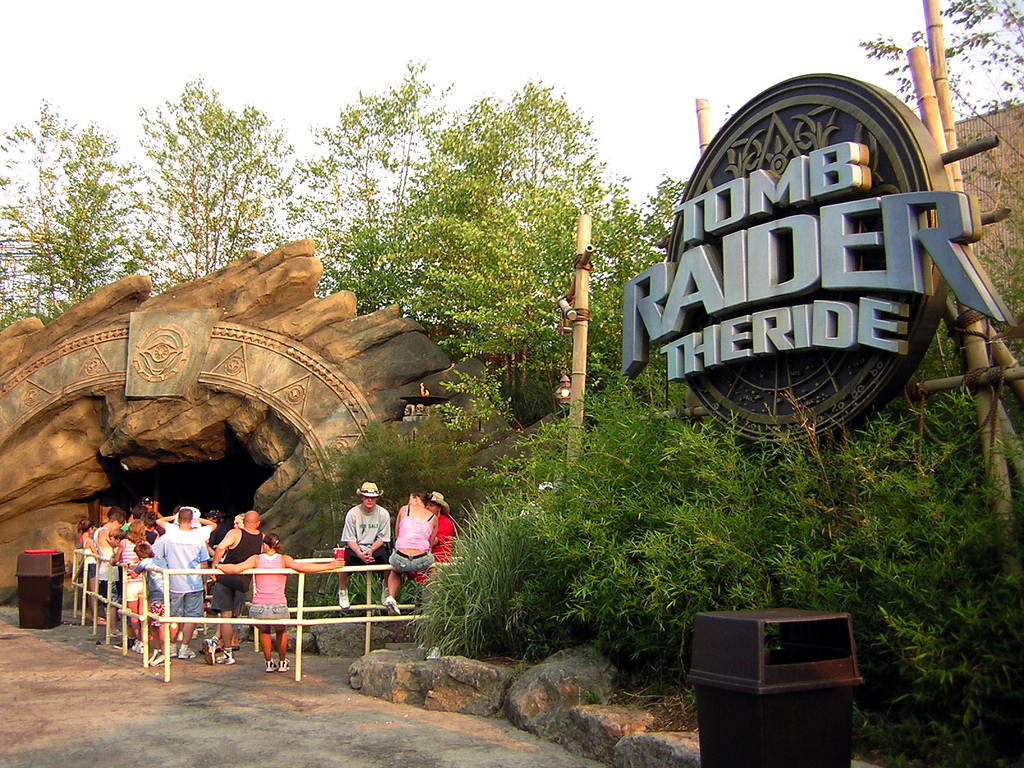
                A great example of a transmedia franchise is the Tomb Raider series. Tomb Raider originally started off as a best-selling video game in 1996. From there it has taken on many forms, including: a series of 10 video games, 2 films, comic books, novels, an animated series, and even amusement park rides. In an article Jenkins wrote for MIT Technology Review, he states, "Each franchise entry needs to be self-contained enough to enable autonomous consumption. That is, you don’t need to have seen the film to enjoy the game and vice-versa."(Jenkins, pg.3) When it comes to this franchise, this is absolutely true. No one piece of this franchise needs to be played or seen in order to play or see any other part. Jenkins refers to this as part of the "ideal form of transmedia storytelling:". In other words, when a piece of media is produced and moves into other mediums whilst remaining autonomous. The Tomb Raider franchise does this well, as a viewer of the films would never have had to play the games to understand what's going on. Even the games themselves offer a new story in each entry, that ultimately contributes to the overall story.
Tomb Raider: The Game: The Movie: The Ride
               Beginning in 1997, one year after the original game released, the first of several Tomb Raider Comics was published. This was the first time Tomb Raider crossed over into other media. It was the beginning of it's transmedia transformation. The games themselves provide the user an interactive experience with the Tomb Raider world. As stated earlier, Jenkins points out that the notion of interactivity makes for a transmedia experience. Both comics and novels also offer a certain level of interactivity with the story, while also offering new insights into the Tomb Raider world. Jenkins feels strongly about this as well. In his article for MIT, he writes, "In reality, audiences want the new work to offer new insights into the characters and new experiences of the fictional world. If media companies reward that demand, viewers will feel greater mastery and investment"(Jenkins pg.2) This is most certainly the case here. The Tomb Raider franchise has done itself well moving into different media platforms, expanding its story and popularity.
                You can't deny the popularity of a series when it has it's own amusement park rides. A press release of one of the rides from tombraiderchronicles.com states, "With only seconds to spare before certain calamity, guests strap in to the only possible vehicle of escape. Playing off scenes from the motion picture filmed in Cambodia and Iceland, the escape will include rocketing upward for a close encounter in an ice cave with menacing, razor-sharp stalactites and a face-first plunge straight down toward a pit of boiling, red-hot lava."(tombraiderchronicles). The Press release describes the ride as an interactive experience designed to make riders feel as though they are experiencing stunts from the movie. You can look at the rides as an attempt to make the Tomb Raider world more interactive and popular. By creating a theme park ride, people can literally experience the story physically. This, in turn, will make those new to the series want to explore these experiences in the films, games, and all other related media. The amusement park ride is ultimately a brilliant piece of transmedia marketing, providing a new stimulation to the series that stands, as Jenkins says, autonomously.
              So what have we learned? Tomb Raider is a transmedia force. From games to books to movies to even an amusement park ride, the Tomb Raider franchise has made great use of transmedia storytelling. The games are interactive, the ride provides a physical thrill, the books provide new insight, and the films add a new visual flair for both fans and the non-fans alike. The series essentially check-marks each point on Jenkins list of a successful transmedia franchise. Based on this kind of growth, and with a potential third film incoming, it will be interesting to see just how far one transmedia franchise can reach.


Bibliography:

Jenkins, Henry. "Transmedia Storytelling" MIT Technology Review. 15 Jan. 2003. 04 Nov. 2013

Jenkins, Henry. "Transmedia Education: the 7 Principles Revisited" Confessions of an Ace-Fan. 21 Jun                2010. 04 Nov. 2013

TombRaiderChronicles. Tomb Raider The Ride: Kings Island Tombraiderchronicles.com 2002. 05 Nov.              2013

Tuesday, November 5, 2013

S.O.P.A. and P.I.P.A. Preventing our right to share.


These past years the entertainment industry has been fighting a battle to prevent our freedom of speech. SOPA , a house bill which stands for the Stop Online Piracy act was introduced to U.S. House of Representatives by Rep. Lamar Smith in 2008. It is a rewritten version of the first failed attempt to bring a law like this about, the PRO IP act of 2008.  SOPA' s main goal is to take out anybody who talks about material that is copyrighted. It will give the Attorney General the right to get a court order to force websites and search engines like Google, Yahoo, and YouTube from linking to any websites that offer copyright images. It will also stop payment processors like Visa and MasterCard from accepting third party payments from these websites. SOPA Will also enable companies to create blacklists of websites they think may be infringing on copyright laws. Finally, the website will be given an ultimatum. They have five days to take down material or the government has the right to take it down themselves.

PIPA, the second bill works in conjunction with S.O.P.A. to eliminate all copyright infringement. It was introduced to the Senate in May 2011 by Senators Leahy, Hatch, and Grassley as a new and improved version of the Combating Online Infringement and Counterfeits act of 2010. PIPA will give corporations the right to take legal action any website they believe is disobeying copyright laws. With PIPA, internet providers will have the right to block access to websites that are seen as enablers of stolen material. They will have the right to use websites and enforce advertisers on websites to remove themselves. Additionally,  companies will have the right to sue any new websites they believe is not doing a good job at preventing infringement.

Websites like Google and Mozilla are against SOPA and PIPA believing it will affect the internet overall. It has the capabilities of causing security issues with websites.  Moreover, they believe that these laws, if put into effect with our freedom of speech. The internet and big companies want to have a monopoly on what we see and hear. They are also comparing companies like Google to pirates because they give users the power to find these links. With SOPA and PIPA, big entertainment companies can take down links and sites overall.  The purpose of these laws is to make it harder for sites to sell or distribute music or movies. The entertainment industry is paying to eliminate all internet sharing. So what will happen to Heather in Jenkins chapter "Why Heather can write?" or to fan art? These laws will affect our right to participate in fan fiction, possibly eliminating it overall.  Main stream media will take down Heathers website and crush the dreams of other people who decide to be innovative. 

Clay Shirky disagrees with the media industry in his TED talks against SOPA. He says, “The threat [of the U.S. bills SOPA and PIPA] is the inversion of the burden of proof, where we suddenly are all treated like thieves at every moment we’re given the freedom to create, to produce or to share.” This quote is essential in the way that SOPA will be able to  virtually control what we are able to produce. We are the main producers on the internet and to restrict our right to create is a crime. For example, hit singing sensation Karmin started her career on YouTube doing covers of songs by artist such as Lil Wayne and Chris Brown. If  SOPA were in effect at that time the media industry would have the ability to sue Karmin and take down all her work. Ultimately losing an artist hey are now profiting from. With SOPA we would all be treated like thieves for doing something we learned in kindergarten...sharing. He claims that the main goal of the entertainment industry is to stop the public from producing, they want us to only consume images given to us.


References